Showing posts with label sam. Show all posts

Wednesday, 29 February 2012

seeing the blind...

Today I spent the afternoon at a visually impaired shooting session at Helston and District Rifle Club with Joe Stinton, a thirty-seven-year-old man who lives in Helston, a small town outside of Falmouth. Unlike the majority of the shooters present today, Joe is completely blind. Despite this, he has been shooting since 1999, stopping only momentarily when his child was born. He has been selected twice to compete in the World Championships, and on Friday he will be joining the rest of the Helston team to compete at the British Blind Shooting Championship in Wolverhampton.


Joe relies on a laser fixed to the gun's barrel  to 'see'. The laser points towards the target, resulting in a high pitched noise to be relayed to the headset; the higher the pitch, the closer he is pointing to the centre of the target. Once all his shots are fired, the target is pulled back to the Joe via the rope and pulley system for inspection.   


There are two disciplines in blind shooting: Supported and Unsupported. Quite self-explanatory, Supported shooting is with the use of a tripod and a chair; Unsupported is with neither. Of course, shooting unsupported is far harder, and only Joe and one other shooter at the club are skilled enough to do it. 


Helper Kieth Busby acts as Joe's eyes when initially aiming the gun towards the target. After that, it is all down to Joe.


A perfect score of fifty. Joe gets five shots before the round is over; the bullseye is worth ten points. During the competition this weekend, however, the competitors will only have two shots per target, with thirty targets to hit under timed conditions. 

Joe is surprisingly efficient at manoeuvring, and only needs help when traversing larger distances and attempting tasks which require more dexterity than average.  


Joe celebrated his thirty-seventh birthday two days ago.


This was a fascinating shoot to say the least, and I think Joe is a brilliant guy. He was more than happy for me to be there and we are meeting again next week, at which time I plan to capture more of his day-to-day life. 

S

Wednesday, 1 February 2012

from one to the other...

So, the day for handing in everything that I have done so far since September practical-wise - that's Professional Practice, practical log book and a portfolio of 10x8 prints - has been and gone. And it is safe to say that it was quite an anti-climax. Upon entering the "Assessment Room" - i.e. the Press Room with a new label stuck on the front - we were ordered to place our work on the pile and sign the sheet to make a note of the time (09:16am if you wanted to know). Very high-brow stuff. it was then only a matter of about one hour until we were to be given a new assignment brief, during which time I indulged in a wholesome and nutritional breakfast consisting of a peanut butter sandwich and a pint of coffee. 10:00am, and on to Seminar Room 3 in the Peter Lanyon Building. Following a wrestle with the projector to get it going, we were given our new brief: The Relationship.

Our task, should we chose to accept it  - which we should considering that if we didn't it would probably result in the failing of the course - is to create three more compelling images of three groups of different people who in some way share some kind of relationship. The groups of people can be anything from two or more people in the context of a family (not our own family, I might add), a community or a religious cult - Cornish Association of Satanic Worshippers anyone? A minimum of nine working prints must be ready for review by the Monday 20th February. The project will be shot on 35mm, black and white film and all processing/printing must be done traditionally. 

What immediately sprung to my mind, and indeed everyone's in the room (we were given a swift lecture on the subject) are romantic images from classic reportage work such as Eugene Smith's Country Doctor or Larry Towell's The Mennonites. But seeing as we only have a three week deadline, such complex stories will be difficult to come by. Thus, we are encouraged, as usual, to shoot stories which are achievable and to save the really meaty stuff for later in our degrees. 

So far I have been in contact with a country vicar and a gang of mass-knitting grannys... more on that to come shortly.

S

Wednesday, 25 January 2012

Twenty-four-hour Project: Mike Gibson, a Portrait of Plymouth

Last week the first year Press & Editorial Photography course were given a twenty-four-hour assignment; the brief was to create 'a portrait of Plymouth'. As the name suggests, we had had one day to complete this (yesterday, in fact). We needed to find an alternative side - or something unusual - to Plymouth that people do not see everyday (for example that lovely water feature in the town centre). We had to phone ahead, organise shoots and be generally organised. When we were finished, we had to upload, edit and FTP the files (metadata and all) to Ashley, who is the administrator at Cartel Photos.  


This assignment was designed to take our skills in to a faster 'Press style' of working, much like it would be in the professional industry.


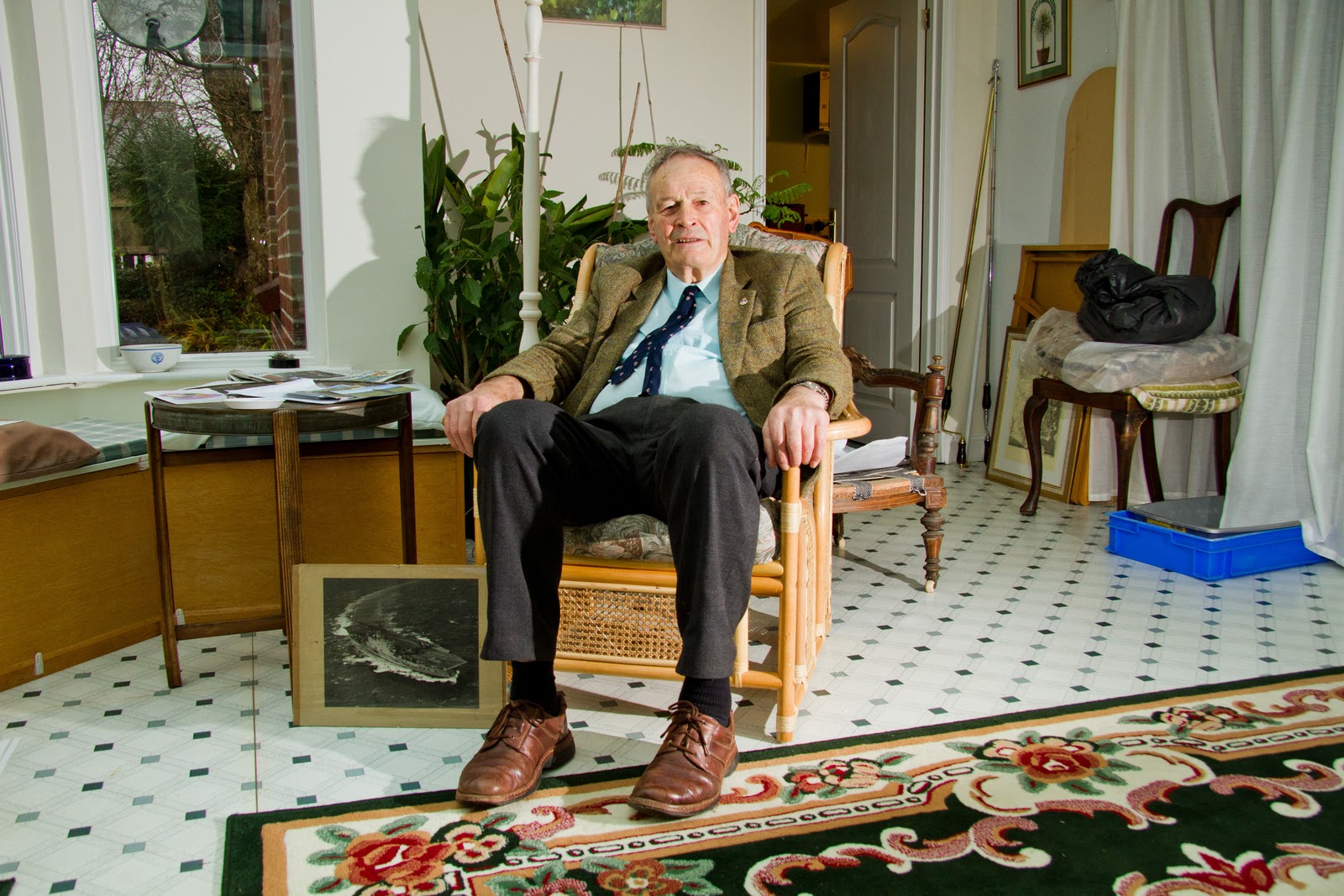
My chosen subject was Mike Gibson, a Plymouth-born, Halshaw-educated, ex-Royal Navy fleet air arm engineer. Since retiring he has become a committed member of the Plymouth community, acting as a trustee for the Widewell Association as part of a team which maintains Ebberston Millenium Park, a public space just outside of Southway, Plymouth. Mike has become a local celebrity recently since commencing a personal vendetta against fly-tipping in the suburban estate of Southway.


Mike sitting in his conservatory at his home in Southway, Plymouth. To his left is a photograph of the HMS Ocean, a destroyer that Mike served on during his time in the Royal Navy.


Mike started voluntarily litter picking after his doctor recommended he walk two miles a day following a major heart bypass operation. During his excursions he noticed that worryingly large amounts of rubbish lay strewn across the pavements of Southway. Now, through recent exposure in the Plymouth Herald, help from the council is beginning to present itself. However, there is still a big problem with litter in Southway, as Mike explained...


Mike holding the Plymouth Herald. On the front page is a recent article about his litter picking excursions.


A litter bin which Mike filled with fly-tipped rubbish just two days before. The contents still remain.


In the car park of the Paper Converting Company, Mike points out a particularly bad area for fly-tipping amongst the warehouses of a Southway industrial estate. In his hand he holds a scrapped bike helmet. 


Crates of opened, unopened and discarded beer and wine; a cardboard box filled with French rolls; mattresses; a gun. These are just  a few of the items which Mike has recently discovered discarded in to the road-side bushes, industrial estates and bus shelters of Southway. He described it as 'disgraceful'. Mike's vendetta against fly-tipping in Plymouth has only just begun; however, at 86 years' old, he cannot keep on litter picking like he has. His eyesight is deteriorating, and walking is difficult. It's not over yet, though, he says. Since his exposure in the Plymouth Herald, Mike has been interviewed by Radio Devon and even ITV News. Things are starting to gather momentum.  


Mike points out a dumped bin bag filled with litter in a road-side bush. "Who knows what's inside that" he said.

Mike shows me the Langley Estate, an area unfortunately heavily affected by the dumping of household waste.


Cleaning up the streets of Southway is not all that Mr. Gibson cares about. Soon after arriving at his home, I discovered that he is an ex-fleet air arm engineer for the Royal Navy. Starting as a radio mechanic, Mike worked his way up the faculties until he enlisted in the Navy in 1945, ending up on the HMS Ocean as Lead Mechanic.


A badge which Mike obtained from serving on the HMS Ocean - after training as a radio engineer and joining the Royal Navy in 1945 - is permanently pinned to his jacket. He acted as Lead Mechanic on the ship; shortly after he became the Petty Officer


The HMS Ocean badge. 


A collection of badges from ships that Mike has previously served on hangs on a wall in his home.

Mike and his family have a deep-seated history within the Navy;  his father enlisted in the 1800s, and served on the HMS Sturdy as Engineer Officer in the early 1900s. Mike told me of how his father's ship at the time, the HMS Sturdy, ran aground off the coast of Tiree, a small island which resides in Scottish waters. Mike's father was not fatally injured, but in 1945 he organised the construction of a memorial on the island to commemorate those who had lost their lives in the wreck. Affected family members and friends were invited.  


On an atlas map of Scotland, Mike points out the island of Tiree, where his father was injured as his ship, the HMS Sturdy, ran aground.


Mike shows me an old photograph of himself whilst he was at school, wearing a classic 'blue coat' uniform. In the background, a similar portrait of his wife sits on the window ledge.

Mike and his wife Barbara have been married for 56 years. 

Mike and Barbara sit down in their living room for a lunch of beans and toast and a cup of tea.


At 86 years' of age, Mike's eyesight is slowly deteriorating so driving is impossible; a buss pass enables him to be mobile in his attempts to rally the City Council in to changing the way they deal with fly-tipping in the Southway area. He has already gathered momentum through his recent exposure in the Plymouth Herald and other news organisations, and more and more support is presenting itself. For the Navy veteran, it is now a matter of time and bureaucracy. 


S

Saturday, 21 January 2012

Saturday arts club at Penryn Rugby Club.

Today I had my first ever job for the Falmouth Packet (the local newspaper). It was at a Saturday arts club for children held at Penryn Rugby Club. The kids were working on the 'Paint-O-Meter', a device to measure how much paint has been collected - through charitable donations - to go towards a mural which will be painted in a Falmouth industrial estate. It was a shoot for the local paper, so it's all smiley faces and happy times.


These images will hopefully be appearing in Monday's edition of the Falmouth Packet.


S

Friday, 20 January 2012

Falmouth International Maritime Museum

For the past few months I have been liaising with the International Maritime Museum in Falmouth in regards to supplying them with photography - both corporate and internally. Today was the day when this plan was realised, and together we have come to an agreement: I will work for the museum as a photographer on a part-time, freelance basis voluntarily, supplying the museum with everything from staff portraits to promotional shots when I feel like it. In return I am free to supply and sell any of these images to the Falmouth Packet (the local newspaper) through the Cartel agency here at the university if they need them. I am very happy with this arrangement - it means the museum are able to bring me in whenever they (or whenever I am free) and in return I get experience and something good to put on my CV (and hopefully some money from the newspaper). 

Today - as a sort of 'starter' shoot - I went to the museum to get some shots of them hanging some new boats in the museum's main hall. Below are the results. I shot with my Canon 450D and two speed lights.


Jake hulme hanging a GBR racing boat from the 2000 Sydney Olympics.

Employees Elliot Holmen (left) Jake Hulme (Centre) and Mel Sharp pose above the museum's main hall.  

Jake rigs up the GBR boat as Elliot and Mel look on.


Jake expertly controls the cherry-picker as he navigates across the museum floor.


S

Tuesday, 17 January 2012

The Portrait element: David Shipley (35mm, B/W film)

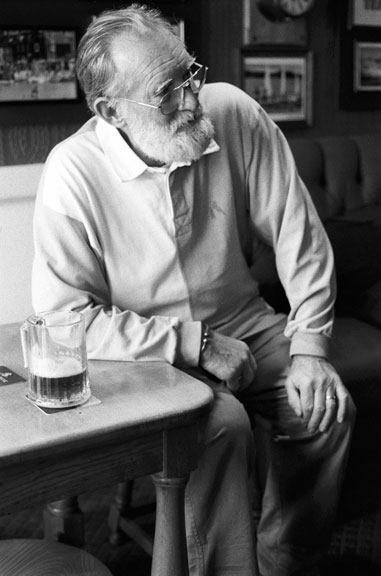
Below are the four images of ex-marine engineer/competitive sailor David Shipley which I have chosen to submit as my final images for the Portrait Element brief...


Observed portrait - ambient light

Environmental portrait - ambient light

Detail - ambient light

Formal portrait - with Metz flash


S